A Tailor’s Guide to Lapel Styles: Notch, Peak and Shawl
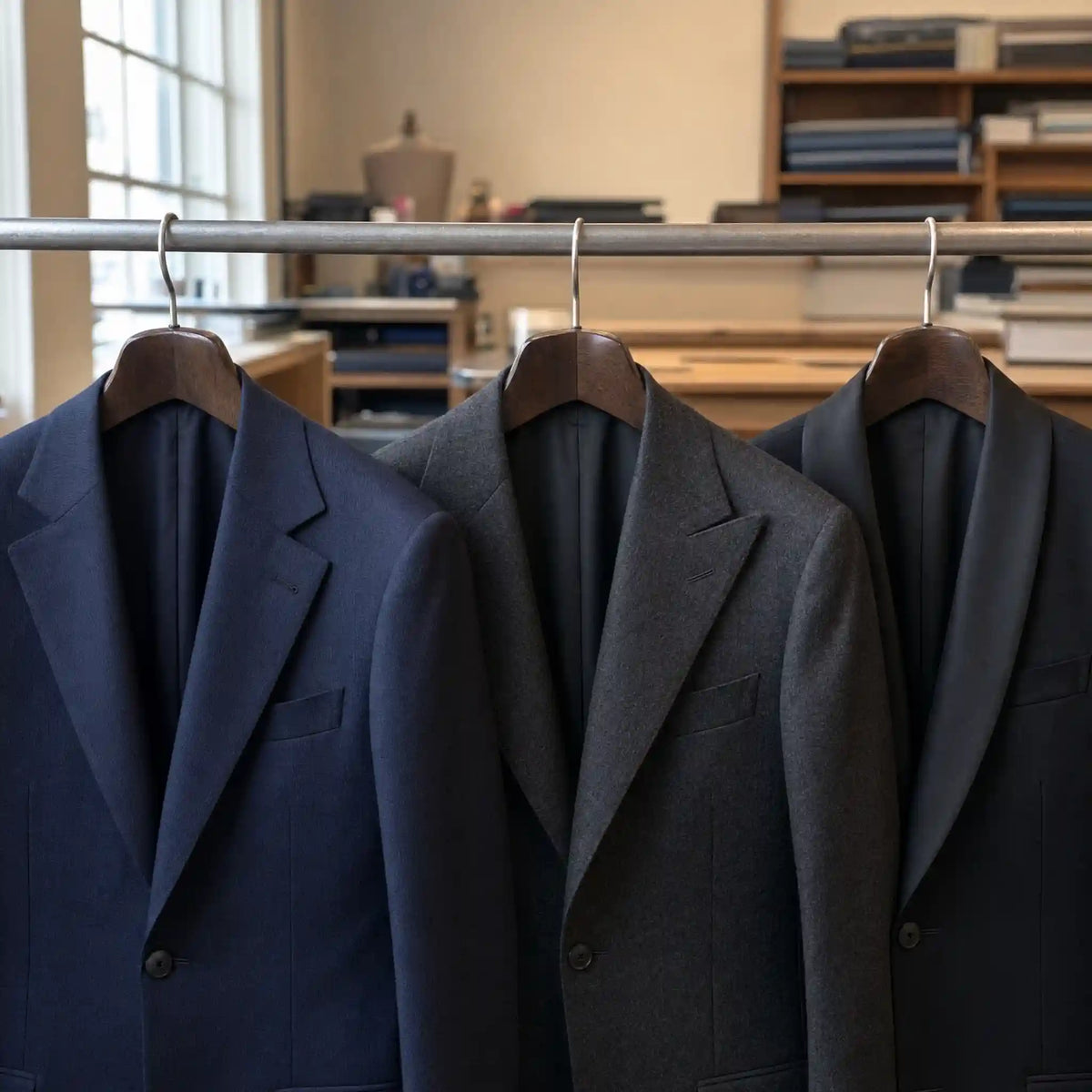
There are three main lapel styles: notch, peak and shawl. A notch lapel is the most versatile and suits business suits, blazers and everyday wear. A peak lapel is sharper and more formal, and works on double-breasted suits, formal suits and tuxedos. A shawl lapel is a smooth, rounded collar used mainly on dinner jackets for black tie. If you only own one suit, choose a notch lapel. For black tie, choose a peak or a shawl.
I'm Michael Frackowiak, a bespoke tailor. At almost every first fitting, a client asks me which lapel he should choose. It sounds like a small detail, but the lapel frames your face, your shirt and your tie, so it changes how the whole jacket looks. This guide explains each lapel style, how wide it should be, how it should sit, and how to choose one for your body and your event.
What is a lapel?

A lapel is the folded flap of cloth on the front of a jacket, below the collar. It folds back from the chest and frames the shirt and tie.
These are the parts tailors talk about:
- Collar: The band of cloth that sits around the back of your neck.
- Gorge: The seam where the collar joins the lapel.
- Notch: The gap between the collar and the lapel, on a notch lapel.
- Lapel point: The tip of the lapel, which can point outwards or upwards.
- Belly: The gentle outward curve along the edge of the lapel.
- Roll line: The line where the lapel folds back from the chest.
- Buttonhole: The small hole on the left lapel, made for a flower or pin.
When I cut a jacket, I plan all of these together. The style is only one decision. Width, gorge height and roll matter just as much.
The three main lapel styles
What is a notch lapel?
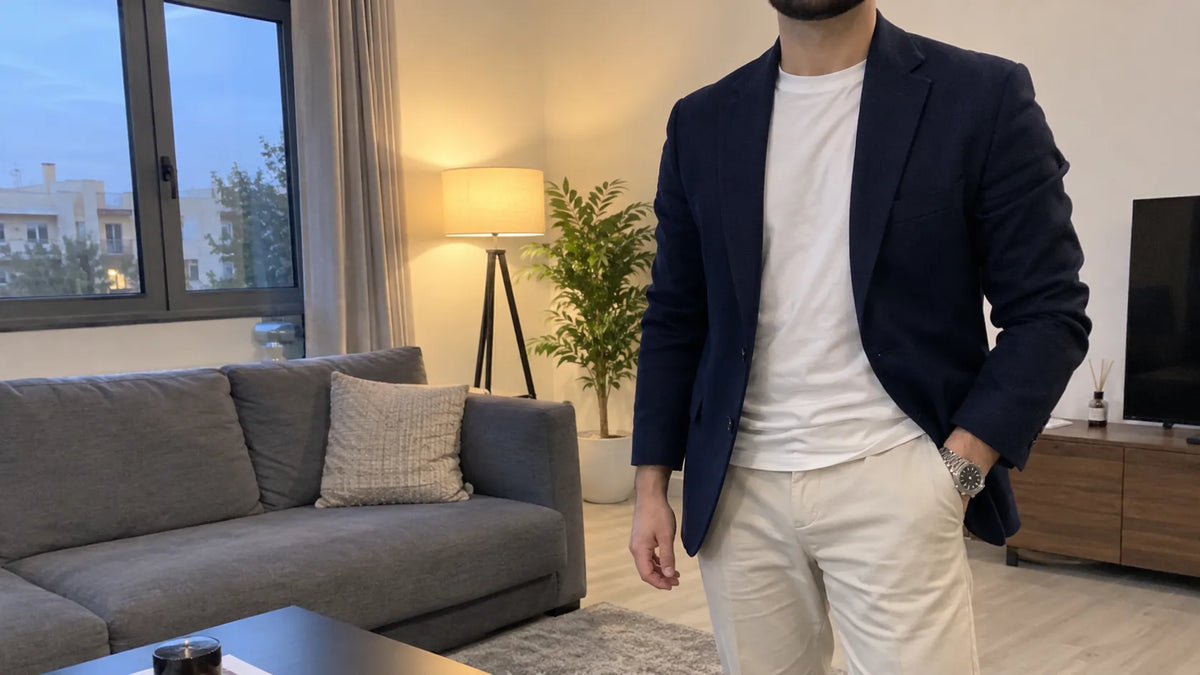
A notch lapel has a small V-shaped gap where the collar meets the lapel. The lapel points outward towards the shoulder.
It's the most common lapel in menswear. You'll find it on most business suits, blazers and sport coats. It looks calm and professional, and it suits almost every body type.
Wear it for: Work, interviews, daytime weddings, smart casual events, and your first suit.
What is a peak lapel?

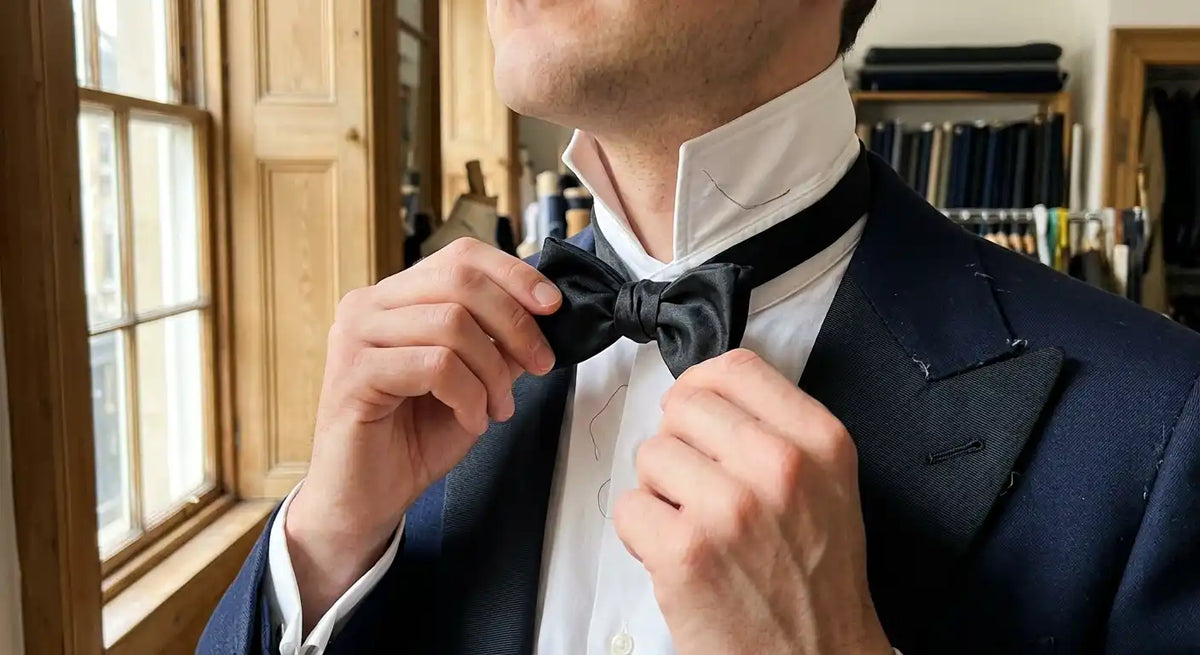
A peak lapel has points that rise upward and outward towards the shoulders. The collar and lapel meet with almost no gap.
The upward line draws the eye up and out, which makes the shoulders look broader and the waist look narrower. It's the standard lapel on double-breasted jackets and a classic choice for tuxedos.
Wear it for: Black tie, evening weddings, formal events, double-breasted suits, and a confident business look.
What is a shawl lapel?
A shawl lapel, also called a shawl collar, has no notch and no peak. It's one smooth, rounded curve running from the back of the neck down to the button.
It comes from the Victorian smoking jacket, which is why it feels relaxed and elegant at the same time. Today it's used almost only on dinner jackets and tuxedos, usually faced in silk.
Wear it for: Black tie, evening events, galas and winter parties. I wouldn't put it on a business suit.
Notch vs peak vs shawl at a glance
| Feature | Notch | Peak | Shawl |
|---|---|---|---|
| Shape | V-shaped gap | Points angle upward | Smooth curve, no gap |
| Formality | Everyday to business | Business to black tie | Black tie |
| Best on | Single-breasted suits, blazers | Double-breasted, formal suits, tuxedos | Dinner jackets |
| Visual effect | Balanced, calm | Broader shoulders, taller look | Soft, sleek line |
| Versatility | Highest | Medium | Lowest |
Notch vs peak lapel: which is more formal?
A peak lapel is more formal than a notch lapel. The sharp, upward points look deliberate and dressy, which is why peaks appear on tuxedos and morning coats.
A notch lapel is the practical everyday choice. It's perfectly smart for business and most weddings, but it's the least formal of the three.
My advice is simple. If you're building a wardrobe, start with notch lapels. Add a peak lapel once you want a suit that feels more special.
Peak vs shawl lapel on a tuxedo

Both are correct for black tie, so the choice comes down to the look you want.
- Peak lapel tuxedo: Sharp and structured. It makes the shoulders look stronger and suits a slimmer or shorter man well.
- Shawl lapel tuxedo: Soft and rounded. It feels classic and slightly relaxed, and suits a man with strong, angular features.
Which is more formal? Opinions differ. Traditionally the peak was the standard, while the shawl came from the more relaxed smoking jacket. In practice, both are fully correct for black tie today.
A notch lapel tuxedo is the one I steer clients away from. It works, but it looks closer to a business suit. If you're unsure where the line sits, my guide to tuxedo vs suit explains the dress code in full.
Can you wear a peak lapel to work?
Yes. A peak lapel on a well-cut business suit looks confident and polished. In a creative or senior role, it can set you apart.
Keep the cloth calm (navy, charcoal or grey) and the width moderate. A very wide peak lapel in a bold cloth can look like a costume in a meeting room.
Lesser-known lapel styles
These are rare but worth knowing, especially if you're commissioning bespoke:
- Fishmouth lapel: A notch lapel with a rounded collar edge, popular with Italian and French tailors.
- Cran necker: A notch with a distinctive downward-sloping collar, found on some Italian jackets.
- Slim notch: A narrow notch lapel for a modern, lean look.
- Peak shawl: A shawl collar with a small point near the shoulder. A statement piece for evening.
I make these for clients who want something personal, but I always check that the style suits their face and frame first.
How wide should your lapels be?

Most lapels range from about 2.5 to 4 inches at the widest point. Width depends on your build, not on fashion.
| Lapel width | Inches | Best for |
|---|---|---|
| Slim | 2 to 2.5 | Slim builds, very modern suits |
| Classic | 2.75 to 3.5 | Most men and most suits |
| Wide | 3.75 to 4.5 | Broad chests, double-breasted, peak lapels |
The rule I use: the lapel should reach roughly halfway between your collar and your shoulder seam. If it's much narrower, your chest looks wider than it is. If it's much wider, the lapel swallows your frame.
Peak lapels usually look best a little wider than notch lapels, because the points need space to angle up properly.
Gorge height and why it matters
The gorge is where the collar meets the lapel. Its height changes how tall and modern a jacket looks.
- High gorge: Sits close to the collarbone. It looks modern and makes you look taller.
- Low gorge: Sits lower on the chest. It looks traditional and softer.
For most men, I place the gorge around the collarbone. Shorter clients often benefit from a slightly higher gorge, but too high can look forced. This is one of the details that ready-made suits set once for everyone, and that I adjust for each person.
Lapel roll: the detail that shows quality
Look at the side of a good jacket and you'll see that the lapel doesn't lie flat. It curls gently from the chest towards the button. That curve is the lapel roll.
A good roll comes from a canvas layer inside the chest and from hand padding stitches under the lapel. Many cheaper jackets use glue (fusing) instead, which makes the lapel stiff and flat, and it can bubble over time.
In my work, I hand pad every lapel so it rolls softly and keeps its shape for years. It's one of the clearest differences you can see between a fused suit and a canvassed, bespoke one.
Lapel facings on dinner jackets
On a tuxedo, the lapels are faced in silk to set them apart from the body of the jacket.
- Satin: Smooth and shiny. It looks glamorous under evening light.
- Grosgrain: Finely ribbed and matte. It's quieter and more traditional.
Whichever facing you choose, your bow tie, cummerbund or waistcoat, trouser braid and covered buttons should all match it. I explain the waist side of this in my guide to the dinner suit with cummerbund.
How to match lapels with ties, bow ties and shirt collars
Balance comes from matching proportions, not exact measurements.
- Tie width: Keep it close to your lapel width. Slim lapels need a slim tie. Wide lapels need a wider tie.
- Bow tie: A wider lapel suits a fuller butterfly bow. A narrow lapel suits a batwing or slim bow. I cover sizing in my bow tie guide.
- Shirt collar: Wide lapels suit spread collars. Slim lapels suit smaller point collars.
- Pocket square: Keep it modest with a wide peak lapel, as both draw attention to the chest.
Which lapel suits your body type?
| Build | Best lapel | Why |
|---|---|---|
| Short | Peak, high gorge, moderate width | Upward lines add height |
| Tall and slim | Notch or shawl, classic width | Adds width without extra length |
| Broad or heavier | Wide peak or classic notch | Keeps proportion with the chest |
| Slim | Classic notch, avoid very wide lapels | Wide lapels swamp a narrow frame |
| Muscular or athletic | Classic to wide, peak or notch | Matches a broad chest and shoulders |
If you train hard, lapel width matters even more, because a narrow lapel exaggerates a big chest. I cover this in more detail in my guide to suits for muscular men.
Face shape plays a part too. A rounder face looks sharper with a peak lapel, while a long, angular face is softened by a shawl.
Lapels on double-breasted vs single-breasted jackets
- Double-breasted: Almost always peak lapels. The points balance the wider front.
- Single-breasted: Usually notch, but a peak lapel makes a single-breasted suit feel more formal and stylish.
- Dinner jackets: Peak or shawl, single or double-breasted.
A double-breasted jacket with a notch lapel exists, but I rarely recommend it. It tends to look unbalanced.
Lapel styles for every occasion
| Occasion | Recommended lapel |
|---|---|
| Office and business | Notch, or a moderate peak |
| Job interview | Notch |
| Daytime wedding | Notch or peak |
| Groom | Peak, or shawl for black tie |
| Black tie or gala | Peak or shawl in silk facing |
| Smart casual | Notch on a blazer or sport coat |
| Christmas party | Shawl in velvet |
Blazers and sport coats almost always use notch lapels. If you're unsure which jacket you need, I explain the difference between a blazer and a sport coat in another guide.
The lapel buttonhole
The buttonhole on the left lapel was made to hold a flower. Today it's used for boutonnières at weddings and for lapel pins.
On a good jacket, the buttonhole is a working one, sewn by hand, with a small loop behind the lapel to hold the flower stem in place. A double-breasted jacket can have a buttonhole on both lapels for symmetry. A hand-sewn lapel buttonhole is a small sign of quality that most people never notice, but you will.
Common lapel mistakes
- A shawl lapel on a business suit.
- A notch lapel tuxedo at a strict black tie event.
- A lapel too narrow for a broad chest, or too wide for a slim one.
- A tie that's much wider or narrower than the lapel.
- A flat, fused lapel that doesn't roll.
- Choosing a trendy width that will date within a few years.
- Lapel facings that don't match the bow tie on a dinner jacket.
Why I plan lapels by hand in bespoke

On a ready-made suit, the lapel style, width and gorge height are fixed for every customer. When I make a suit, I draw the lapel on the cloth for each client, judging it against his chest, shoulders, face and the occasion.
That means the width suits your frame, the gorge sits at the right height for your build, and the lapel rolls the way it should because it's hand padded over canvas. It's one of the reasons a bespoke jacket looks right even from across the room. I explain more about the benefits of bespoke clothing in another guide.
If you're choosing between notch, peak and shawl for a new suit or a dinner jacket, I'm happy to talk it through at a fitting.
Lapel FAQ
What are the three types of lapels?
Notch, peak and shawl. Notch is everyday, peak is formal, and shawl is for black tie.
Which lapel is most versatile?
The notch lapel. It works for work, weddings and smart casual.
Which lapel is best for a wedding?
For a groom, a peak lapel stands out. For black tie, choose peak or shawl. Guests can wear a notch lapel.
Is a shawl lapel only for tuxedos?
Mostly. It also appears on velvet smoking jackets and some casual knit blazers, but not on business suits.
Can you wear a notch lapel tuxedo?
You can, but it looks less formal. For strict black tie, choose peak or shawl.
Do peak lapels make you look taller?
Yes. The upward points lead the eye up, which adds height and broadens the shoulders.
How wide should a lapel be?
Usually 2.75 to 3.5 inches, adjusted to your build so it reaches about halfway to the shoulder.
Should my tie match my lapel width?
Roughly, yes. Similar widths keep the outfit balanced.
What is a lapel gorge?
The seam where the collar meets the lapel. A higher gorge looks modern, a lower one looks traditional.
Why do some lapels roll and others lie flat?
A rolled lapel is shaped over canvas and hand padding. A flat lapel is usually fused with glue.
Are wide lapels back in style?
Classic and slightly wider lapels are popular again, but a width that suits your build will always look better than a trend.
The simple rule to remember
Choose a notch lapel for everyday suits, a peak lapel when you want to look sharper or more formal, and a peak or shawl for black tie. Then let the width, gorge and roll suit your body. Get those right, and the lapel will make the whole jacket look like it was made for you.