
Tuxedo vs Suit for Black Tie Events: Which Should You Wear?
For a strict black tie event, wear a tuxedo (dinner suit), not a suit. A tuxedo has satin or grosgrain lapels, covered buttons, a satin stripe down each trouser leg, and is worn with a black bow tie. A dark, well-fitted suit is acceptable only when the invitation says "black tie optional," or for cocktail and semi-formal events.
You open the invitation and see two words that change everything: black tie. Suddenly you're standing in front of your wardrobe, looking at a suit that seemed perfectly fine yesterday and wondering whether it's actually good enough tonight.
That confusion is normal. Black tie is one of the most misunderstood dress codes in menswear, and the line between a tuxedo and a suit gets blurrier every year as brands sell "black tie suits" and "formal blazers." This guide clears it up. By the end you'll know what a tuxedo is, what a suit is, when each is appropriate, and how to make the right call without second-guessing yourself at the door.
What does black tie actually mean?
Black tie isn't a garment. It's a dress code, with very specific expectations attached.
The term originated in late 19th-century England as a slightly less formal alternative to white tie, which called for a tailcoat and a white bow tie. Black tie kept the formality but simplified the uniform into what we now know as the dinner suit, or tuxedo, worn with a black bow tie.
Today black tie sits above cocktail attire and business formal, but below white tie. It's the standard for evening weddings after six o'clock, galas, award ceremonies, formal dinners, and opera or theatre openings. When an invitation says black tie, the expectation is a tuxedo. Not your best business suit. Not a dark blazer with a bow tie. A true tuxedo.
What is a tuxedo?
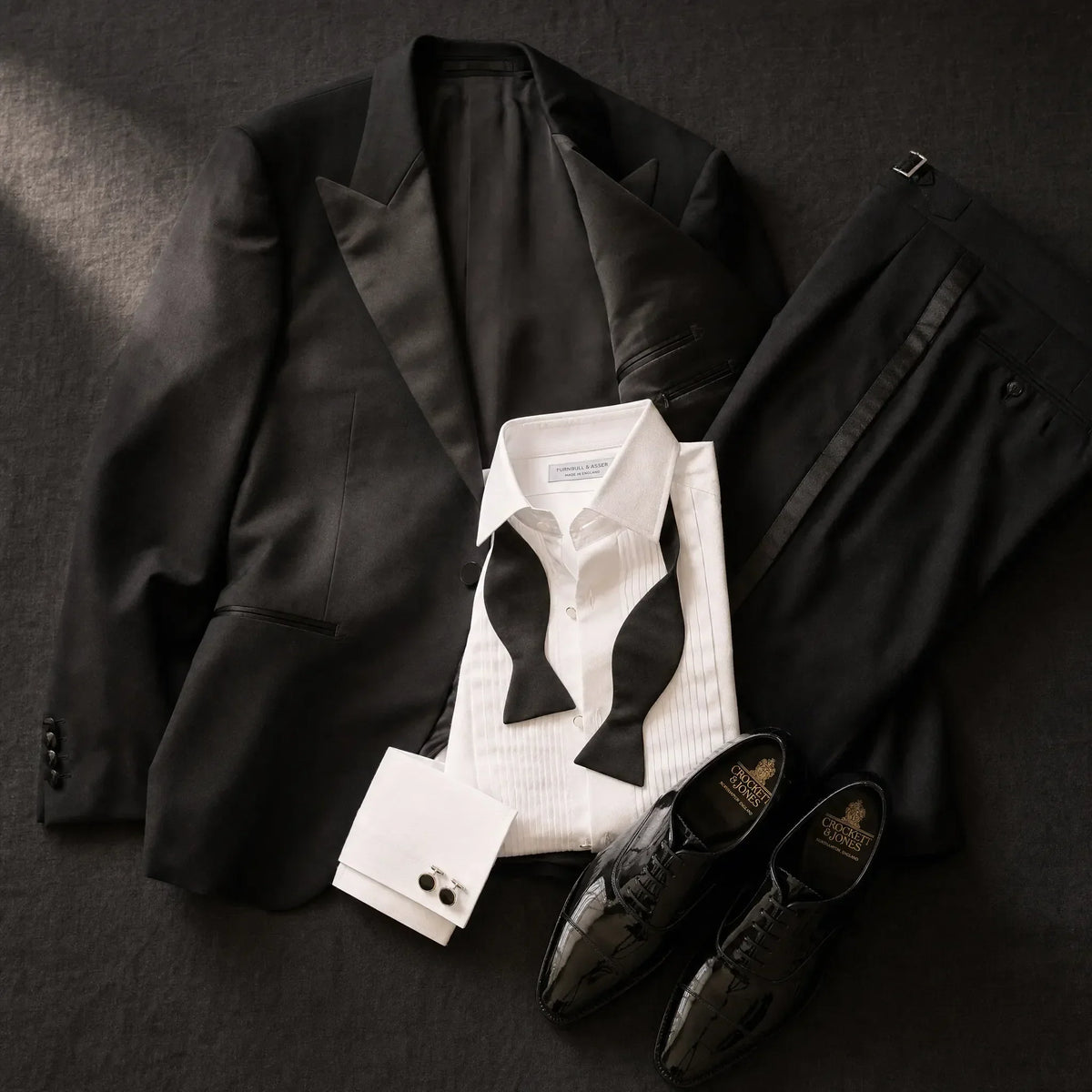
A tuxedo, also called a dinner suit or dinner jacket, is a formal evening garment defined by one detail: satin or grosgrain trim. That's what separates it from every other kind of tailoring, and what makes it the correct choice for black tie.

Key features of a tuxedo
Satin or grosgrain lapels. Tuxedo jackets have peak or shawl lapels, faced in smooth satin or grosgrain that contrasts with the matte wool of the jacket. Notch lapels are a business suit feature and are generally avoided on a formal dinner jacket.
Covered buttons. The jacket buttons are wrapped in the same satin as the lapels, rather than left as plain horn or plastic.
A satin trouser stripe. The trousers have a satin or grosgrain stripe, sometimes called a braid, down the outer seam of each leg. It's one of the fastest ways to tell a tuxedo from a black suit at a glance.
No belt loops. Tuxedo trousers are held up with side adjusters or braces. A belt buckle breaks the clean formal line, so belts are avoided entirely.
A formal dress shirt. Traditionally white, with a wing or turndown collar built to frame a bow tie, and double cuffs for cufflinks. Some styles have a pleated or marcella bib front for extra formality.
A bow tie. This is where black tie gets its name. A self-tied black silk bow tie is the traditional and expected choice, not a long tie.
A cummerbund or waistcoat. Either one covers the waistband where shirt and trousers meet, which shows when the jacket is unbuttoned to sit.
Formal shoes. Highly polished black patent Oxfords are the classic choice, with velvet slippers or opera pumps as a more elevated alternative.

Black and midnight blue are the two traditional colours, and midnight blue often reads richer than pure black under artificial evening light. Velvet dinner jackets in deep jewel tones are an accepted modern variation for winter events.
What is a suit?
A suit is built for versatility, not for one specific level of formality. The jacket and trousers are cut from the same matte cloth, with no satin trim anywhere. That makes a suit useful for business, weddings, dinners, interviews and everyday professional life, but it also means a suit doesn't meet the black tie standard on its own.
Key features of a suit
Matching matte fabric. Jacket and trousers share the same cloth, usually a worsted wool, with no contrasting sheen.
Notch lapels as standard. Peak lapels appear on some formal suits, but notch lapels are the most common and are considered everyday business styling.
Belt loops. Suit trousers are usually made to be worn with a belt, which makes a suit feel more relaxed and functional than a tuxedo.
Flexible shirt and tie pairing. Suits work with shirts in any colour or pattern, standard collars, and either a tie or a bow tie. Going without a tie is acceptable in smart casual or cocktail settings, which would never work with a true tuxedo.
More accessory freedom. Cufflinks, pocket squares, tie bars and coloured socks all become an outlet for personal style with a suit, whereas tuxedo accessories are meant to stay understated and traditional.
Tuxedo vs suit: the key differences

| Feature | Tuxedo | Suit |
|---|---|---|
| Lapel finish | Satin or grosgrain, peak or shawl | Matte, usually notch |
| Buttons | Fabric-covered | Standard horn or plastic |
| Trousers | Satin side stripe, no belt loops | Matching fabric, belt loops |
| Shirt | White, wing or turndown collar, double cuffs | Any colour, standard collars |
| Neckwear | Black bow tie | Tie, bow tie or none |
| Waist covering | Cummerbund or waistcoat | Not required |
| Shoes | Patent Oxfords or velvet slippers | Standard leather dress shoes |
| Best suited for | Black tie events | Business, weddings, semi-formal events |
Can you wear a suit to a black tie event?
This is the question most people are really asking, and the honest answer has some nuance.
For a true black tie event, no. If the invitation says black tie without qualification, a tuxedo is expected. Even an excellent business suit will read as underdressed, and depending on the event, it can stand out in the wrong way.
For black tie optional, a well-chosen suit can work. This wording invites you to lean formal without strictly requiring a tuxedo. A dark suit in black, charcoal or midnight blue, with a crisp white shirt, a silk tie or bow tie, and polished black shoes, is generally accepted. If you own a tuxedo, it's still the safer choice, because it removes all guesswork.
For cocktail, semi-formal or festive attire, a suit is exactly right, and a tuxedo would be overdressed.
The one rule that holds across every version of this is fit. A perfectly tailored suit will always look better than a loose, off-the-rack tuxedo. Formality on paper means nothing if the garment doesn't sit correctly on your shoulders and chest.
How to choose between a tuxedo and a suit
A few practical questions make the decision almost automatic.
What does the invitation actually say? Treat the wording as a specification, not a suggestion. Black tie means a tuxedo. Black tie optional gives you a choice. Cocktail, semi-formal or festive calls for a suit.
What time is the event? Black tie is traditionally reserved for evening events after six o'clock. The formal daytime equivalent is morning dress. For daytime events without a strict code, a suit is usually right.
What's your role? A groom at his own black tie wedding is expected to be the most formally dressed man in the room, which almost always means a tuxedo, and the same goes for the father of the bride. A guest has a little more room, particularly if the invitation says black tie optional.
What's the venue and region? Formal conventions shift by country and venue. A grand hotel ballroom or traditional gala will be stricter than a modern rooftop event with the same dress code on the invitation. In hot climates, the rules stay the same but the cloth changes. For formal galas in Riyadh and across the Gulf, a dinner suit in a lighter wool or wool-mohair keeps the formality without the heat.
Do you already own a well-fitted tuxedo? If you attend even a handful of formal events a year, owning one excellent tuxedo removes this decision entirely, and pays for itself quickly compared with repeated rentals.
Tuxedo vs suit for weddings
Weddings are where this decision matters most, because the photographs last a lifetime.
If you're the groom and your wedding is black tie, a tuxedo is the correct and expected choice, whether the ceremony is in the evening or the reception simply carries a formal black tie theme. A tuxedo photographs beautifully under evening light, and its clean lines hold up for decades.
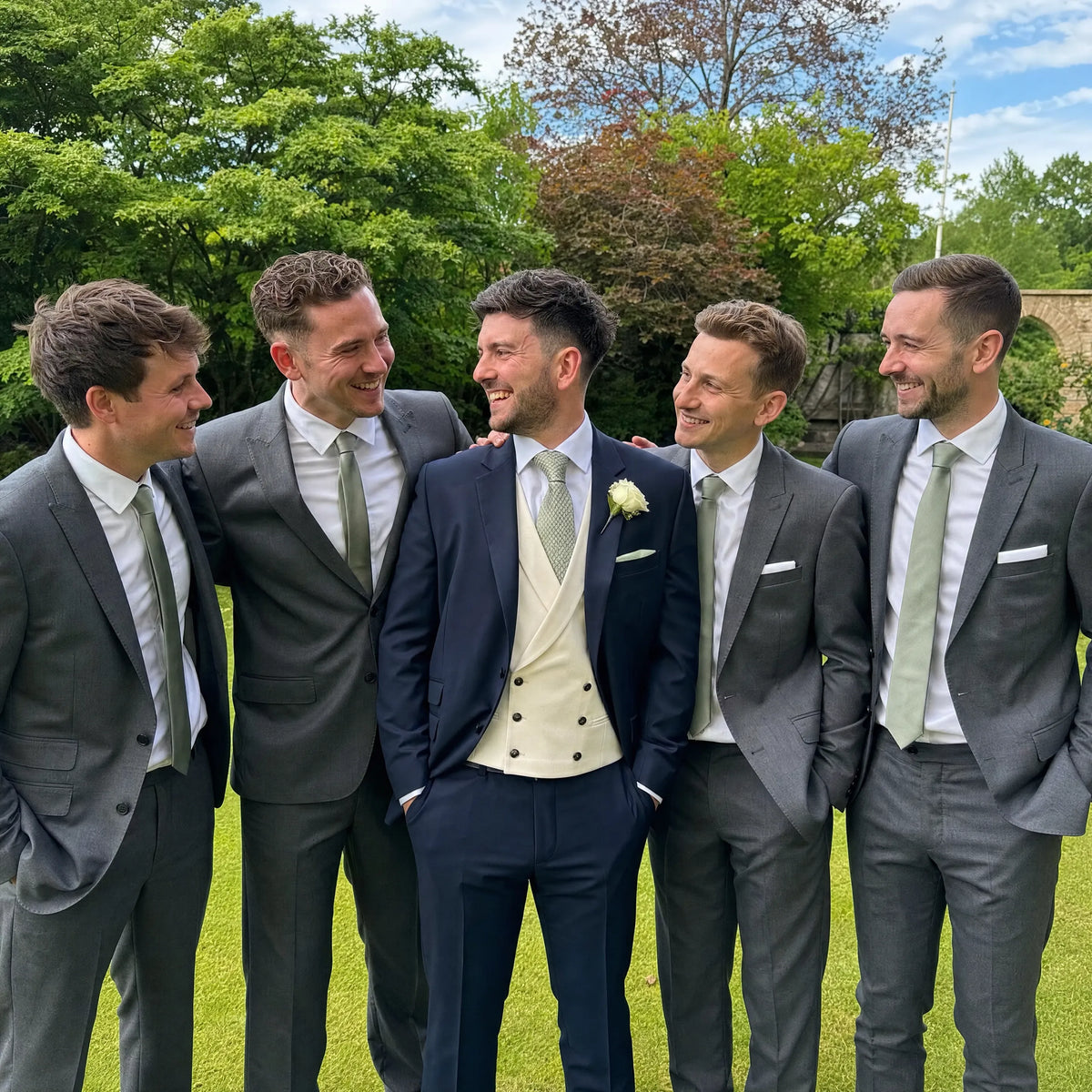
If your wedding is semi-formal, cocktail, or simply elegant without a strict black tie requirement, a well-tailored suit in navy, charcoal or a rich neutral is entirely appropriate, and often more comfortable for a full day. Our groom's guide to wearing a lounge suit shows how to choose the colour, fabric and fit so it still looks special on the day.
This is where a bespoke approach makes the biggest difference. A rented tuxedo is built for hundreds of different bodies and fits none of them perfectly. A bespoke tuxedo or wedding suit is built from a pattern drafted for your shoulders, chest and posture, so it photographs the way a tuxedo should: sharp through the shoulder, clean through the waist, with sleeves that end exactly at the wrist.
If you're planning a black tie wedding, Michael Frackowiak makes custom wedding suits and tuxedos around your exact measurements, from cloth selection to the final fitting. A bespoke dinner suit takes six to eight weeks to make, so allow time.
Why fit matters more than the garment itself
Here's something most guides skip. The biggest factor in whether you look formally dressed or simply dressed up is fit, not the label.
An ill-fitting tuxedo, with sleeves too long or shoulders that droop past your own, will always look worse than a suit that fits as if it was made for you. That's not an excuse to skip the tuxedo at a true black tie event, because the dress code still applies. But it is a reason to put fit ahead of brand or price when you buy or rent.
These fit checks apply equally to tuxedos and suits:
- The shoulder seam should sit exactly at your shoulder point, with no divot or overhang.
- The sleeve should end at your wrist bone, showing a little shirt cuff underneath.
- The jacket should close comfortably with room for a flat hand inside the button, never straining or gaping.
- The trousers should break cleanly at the shoe; a minimal break or none is the modern standard.
This is exactly why bespoke tailoring exists. A garment cut from your own pattern, rather than adjusted from a standard block, solves all four at once.

Common black tie mistakes to avoid
- Wearing a business suit to a strict black tie event. However expensive, a suit without satin details and a bow tie won't meet the dress code.
- Wearing a belt with a tuxedo. Tuxedo trousers aren't designed for one, and a visible buckle instantly signals the wearer doesn't know the rules.
- Choosing a long tie instead of a bow tie. One of the most common mistakes at formal events. It reads as a suit wearing tuxedo pieces, not a true tuxedo.
- Skipping the waist covering. A cummerbund or waistcoat isn't decoration. It hides the gap between shirt and trousers that shows when the jacket is unbuttoned.
- Wearing the wrong shoes. Everyday Oxfords or brogues don't carry the formality of polished patent leather.
- Ignoring sock length. Black tie calls for over-the-calf socks, so no skin shows when you sit.
Frequently asked questions
Is black tie the same as a tuxedo?
Not exactly. Black tie is the dress code, and the tuxedo is the garment that satisfies it. "Black tie" originally referred to the bow tie itself, but the phrase now describes the whole formal outfit.
Can I wear a black suit instead of a tuxedo?
For a strict black tie event, no. A black suit lacks the satin lapels, covered buttons and trouser stripe that define a tuxedo, and it will read as underdressed. For black tie optional events, a well-styled black or midnight blue suit is usually acceptable.
Is midnight blue acceptable for black tie?
Yes. Midnight blue is a traditional black tie colour and often looks richer than true black under artificial light, which is why it remains popular for dinner suits.
Do I need a cummerbund if I'm wearing a waistcoat?
No. A cummerbund and a waistcoat serve the same purpose, covering the waistband, so you wear one or the other, never both.
What is the difference between black tie and black tie optional?
Black tie requires a tuxedo. Black tie optional lets guests choose between a tuxedo and a formal dark suit, though the tuxedo remains the safer, more traditional choice.
Can I rent a tuxedo instead of buying one?
Yes, and renting is a reasonable option for a single event. If you attend formal events regularly, buying or having a tuxedo made bespoke becomes more cost-effective over time, and it will always fit better than rental stock.
Final thoughts
The difference between a tuxedo and a suit comes down to a handful of details: satin lapels, covered buttons, a trouser stripe and a bow tie. Once you know what to look for, the decision is simple. Match the garment to the dress code on your invitation, respect the formality of the event and your role in it, and never underestimate how much fit changes the result.
Whether you're a groom preparing for a black tie wedding or simply want a dinner suit that fits the way it should, working with a tailor who builds around your exact measurements removes the guesswork. Michael Frackowiak makes custom formalwear and wedding suits from his studios in Liverpool and Riyadh, each one cut for you rather than adjusted from a rack.

,%20not%20a%20suit.%20A%20tuxedo%20has%20satin%20or%20grosgrain%20lapels,%20covered%20buttons,%20a%20satin%20stripe%20down%20each%20trouser%20leg,%20and%20is%20worn%20with%20a%20black%20bow%20ti...)