Iconic Movie Suits: What Bond, Specter and Cary Grant Teach About Tailoring
The most iconic movie suits, from Sean Connery's glen-check three-piece in Goldfinger to Cary Grant's grey suit in North by Northwest, have one thing in common: they fit the man perfectly. Not the brand, not the trend, but the fit. That's the lesson worth taking from the screen, and it's exactly what bespoke tailoring gives you in real life.
Films have shaped how men dress for nearly a century. When a character commands a room in a perfectly cut suit, you're watching a costume designer and a tailor solve the same problem I solve every week: making cloth follow one particular body. Below are the looks I'm asked about most, what actually makes them work, and how to translate them into a suit made for you rather than a copy of someone else's.

Why movie suits look so good
Here's what most people miss. Suits on screen look exceptional because the fit is uncompromising. A costume department measures the actor precisely and has the garment cut for him, often in several copies for different scenes.
Most men do the opposite. They buy off-the-rack and accept poor fit as normal: shoulders too wide, sleeves too long, a trouser break in the wrong place. Standard sizes simply don't match individual bodies.
When a suit is built around your measurements and posture, everything changes. You stand taller, your shoulders read cleaner, and you stop thinking about the jacket. That's the real "movie suit" effect, and it has nothing to do with Hollywood.

James Bond: the gold standard
Across more than sixty years of films, different actors have worn very different suits. The constant is fit.
Sean Connery in Goldfinger
Connery's Bond suits were cut by Anthony Sinclair, and the most famous is the grey glen-check three-piece from Goldfinger. It works because nothing is exaggerated. The shoulders are natural with little padding, the lapels are a classic notch, the jacket covers the seat, and the sleeves end at the wrist. The waistcoat adds formality without fuss, which is why a three-piece is still one of the most useful suits a man can own.

To recreate it: a soft grey wool with a subtle check, three pieces, natural shoulders, notch lapels, a crisp white shirt, a plain or knitted navy tie, and black shoes.
Daniel Craig's modern Bond
Craig's first outing, Casino Royale, was dressed by Brioni. From Quantum of Solace onwards, Tom Ford took over, and the silhouette became slimmer and shorter, with narrower lapels and a jacket cut close to the body.

A word of caution from the cutting table: the very short, very tight Craig-era jacket flatters a particular build and dates quickly. Take the precision, but cut the length and the chest for your body, not his.
To recreate it: navy or charcoal, a slim but not tight cut, slightly narrower lapels, minimal trouser break and minimal accessories.
The Bond lesson
Whether you prefer Connery's classic line or Craig's modern one, both put fit above everything. The shoulder must be right, the sleeve must end at the wrist, and the chest must allow you to move. Get those three right and the rest is detail.
Patrick Bateman: 1980s power dressing
In American Psycho, Christian Bale's Bateman wears Cerruti 1881 suits that capture late-1980s Wall Street: strong padded shoulders, wide lapels, double-breasted jackets and bold pinstripes. The wardrobe is the character, obsessive, status-driven and immaculate.

The proportions are firmly of their era and look dated today. The principle doesn't. A power suit should make you feel certain of yourself in business presentations and on conference floors.
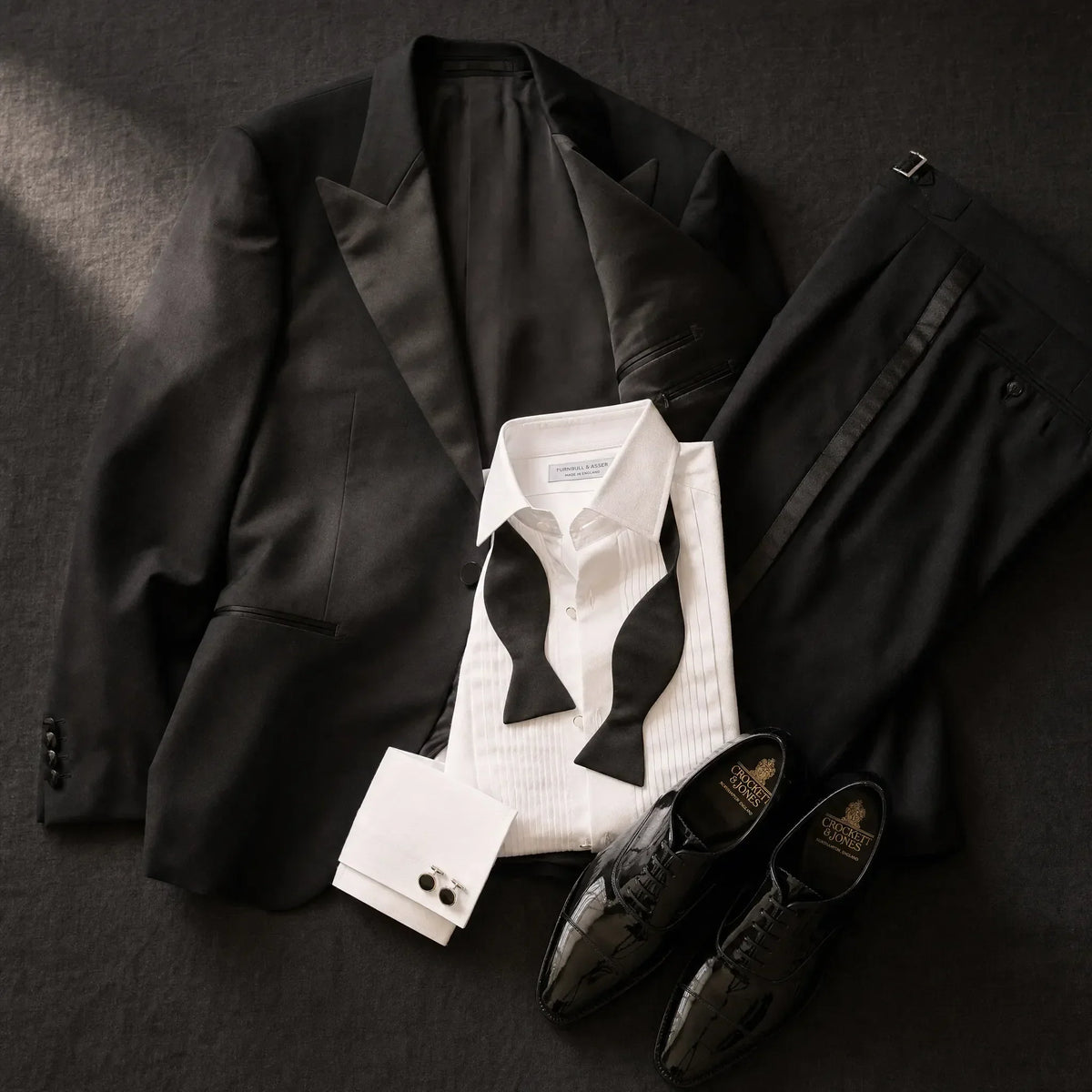
The modern version: keep the structured shoulder, but with far less padding and a natural line. Narrow the lapel, trim the waist, and keep the colours serious: navy for trust, charcoal for authority, and a fine pinstripe for precision. For evenings, Bateman's double-breasted dinner suit with satin peak lapels remains a sound template.
Neo in The Matrix: minimalist black
Keanu Reeves' Neo is defined less by a suit than by a long black coat over black clothing, sunglasses and boots. It's a costume built on a single idea: no colour, no pattern, nothing but line.

The lesson is the discipline of minimalism, not the colour itself. In daylight, and especially in strong sun, black suits tend to look flat and severe, which is why I rarely recommend them for business. If you want the Neo effect, try a deep charcoal or midnight navy in a single, clean colour from head to toe. You get the same restraint with far more life in the cloth.
Harvey Specter: corporate precision
Harvey Specter in Suits is the clearest on-screen example of modern corporate tailoring. What makes his wardrobe work is consistency:
- Every element fits. The shoulders align with his own, there's no excess cloth, and the sleeve and trouser lengths are exact.
- The palette is limited. Navy, charcoal and mid-grey: colours that work in any boardroom and pair easily with shirts and ties.
- The details are quiet. Crisp collars, silk ties, a modest pocket square and polished shoes.
- The proportions are classic with subtle modern updates, so nothing looks dated a few years later.

To recreate it: a navy or charcoal suit with perfectly fitted shoulders and a slim modern cut, a crisp white shirt, a silk tie, black shoes and a simple watch. And posture. Half of Specter's look is how he stands.
Steve McQueen: understated cool
In The Thomas Crown Affair (1968), Steve McQueen wears three-piece suits cut by the London tailor Douglas Hayward. They're soft rather than stiff, with natural shoulders and a jacket that drapes cleanly over the chest. Nothing shouts.

McQueen's lesson is that quality and fit, not labels, create impact. He favoured neutral colours and pieces that lasted, the same thinking behind investing in a suit you'll wear for years.
The Great Gatsby: colour and confidence
In Baz Luhrmann's 2013 film, Leonardo DiCaprio's wardrobe was designed by Catherine Martin with Brooks Brothers. The most famous piece is the pink suit, and in F. Scott Fitzgerald's novel it's a deliberate signal: Tom Buchanan mocks it as the mark of a man trying too hard to belong.

That's the real lesson. Colour on a suit is a statement, and it only works if you wear it with complete conviction. If you want a touch of Gatsby without the risk, a light grey, tan or stone three-piece for a summer occasion carries the 1920s spirit while staying wearable.
Cary Grant in North by Northwest
Cary Grant's grey suit in North by Northwest, cut by Kilgour, French & Stanbury, is often called the greatest suit in film. It survives being chased by a crop-duster and still looks immaculate, which is a fair test of good tailoring.
Why does it endure? Simplicity. A subtle grey glen check, clean lines, a fit that's close without being tight, and nothing that follows a trend. You could wear it today without anyone thinking it was sixty-five years old.
Grant's lessons: quality natural cloth, classic cuts over trends, fit above all else, versatile colours, good shoes, and accessories kept simple.
How to choose your movie-inspired style
Start with your build
A look that suits one actor won't automatically suit you. Taller, slimmer men carry Connery's longer jacket well. Shorter men benefit from a slightly shorter jacket and a tapered trouser. Broad-shouldered men rarely need padding at all, while narrower-shouldered men gain from a soft, natural shoulder that adds shape without bulk.
Then the life the suit has to live
A suit worn five days a week needs a hard-wearing cloth. One worn to occasional events can be lighter and more luxurious. A suit for a wedding asks different things from one for the boardroom. Decide where the suit will actually be worn before you decide which film it's inspired by.
Know the construction you're buying
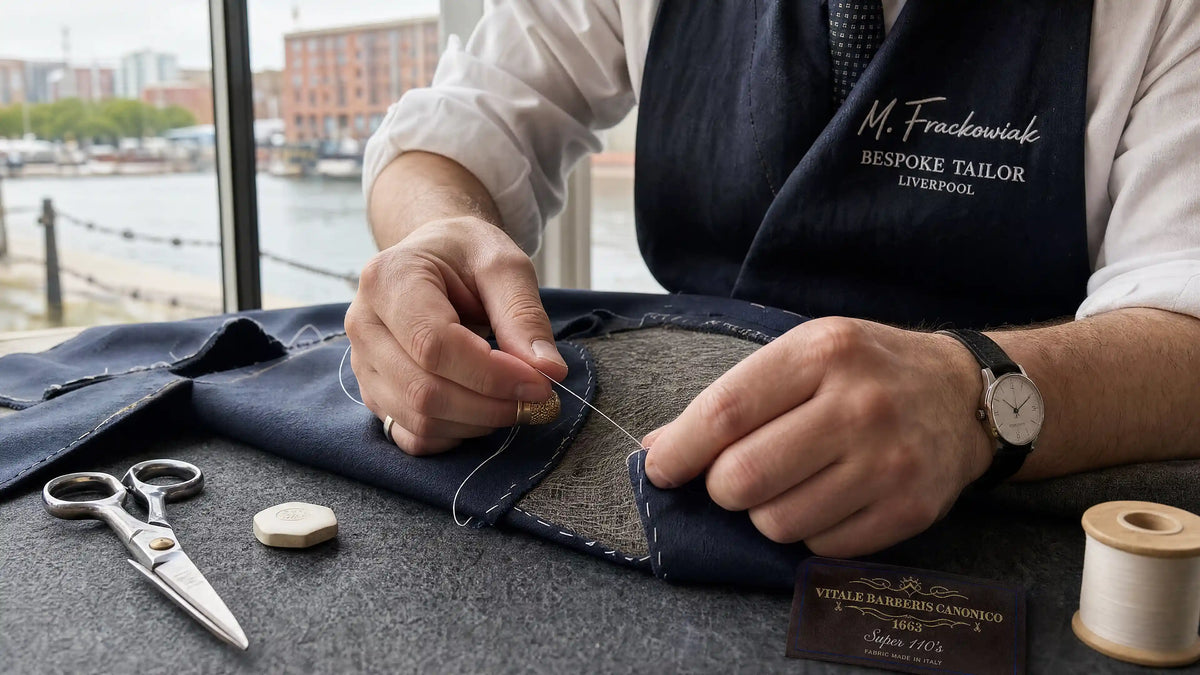
Every suit in this article relies on a canvassed chest, a layer stitched rather than glued into the front so the jacket holds its shape and moulds to you over time. Fused jackets, which cut that corner, are cheaper but don't age as well. And the deepest difference is the pattern itself: one drafted from scratch for your body, rather than an existing block adjusted to fit. That's the line between bespoke and made-to-measure.
From screen to your own suit
Film costumes are made to look good on camera, under controlled lighting, for one person, often for one scene. Your suit has to work in real life: through long days, travel, dry cleaning and years of wear.
Bring the reference that inspires you, whether it's a still of Connery, a photo of Specter, or simply a colour you love. I'll tell you what will translate to your build and what won't, then draft a pattern for you alone. The cloth comes from the same mills that have supplied classic tailoring for generations, such as Holland & Sherry, Scabal and Loro Piana. The result isn't a copy of a movie suit. It's a suit inspired by one, cut for your body and your life.
Bespoke with me starts from £1,700 in Liverpool and SAR 8,500 in Riyadh, and takes six to eight weeks from first consultation to final fitting. Looked after, it lasts fifteen to twenty years, which makes it a far better investment than a string of cheaper suits.
Movie suit FAQs
What is the most iconic suit in film?
Many tailors would choose Cary Grant's grey suit in North by Northwest or Sean Connery's glen-check three-piece in Goldfinger. Both are simple, perfectly fitted and still wearable today.
Who made James Bond's suits?
Sean Connery's suits were cut by Anthony Sinclair. Daniel Craig wore Brioni in Casino Royale and Tom Ford from Quantum of Solace onwards.
Can a tailor recreate a suit from a film?
Yes. Bring a reference image and a good bespoke tailor can recreate the cloth, cut and details, adapted to your own build rather than the actor's. Adapting it matters: what flatters one man won't automatically flatter another.
How do I get a suit like Harvey Specter's?
Choose navy or charcoal, a slim modern cut with perfectly fitted shoulders, a crisp white shirt and a silk tie. The fit does most of the work, which is why bespoke gets closest to the look.
Are black suits a good choice?
For evening and formal wear, sometimes. For daytime business they often look flat and severe in natural light. A deep charcoal or midnight navy gives a similar effect with more depth.
Find the suit that tells your story
The suits in films work because they're made for the man wearing them. You can have the same thing: not a costume, but a suit cut for your body and the life you actually lead.
Bring your inspiration to a private consultation in Liverpool or Riyadh, and we'll start from there.
You can also see my work on Instagram at @michael_frackowiak.