Groom's Lounge Suit Guide: How to Look Like the Groom, Not a Guest
A groom can absolutely wear a lounge suit to his wedding, and most now do. The key is making it look like a wedding suit, not your office suit. Choose a three-piece, a richer colour or texture than your work suits, peak lapels or a contrasting waistcoat, and a precise fit, then finish with a buttonhole flower and wedding-specific accessories.
More grooms than ever are choosing a lounge suit for their wedding day. It's smart, comfortable and far easier to wear than a morning suit, and you can wear it again long after the celebrations are over.
There's one catch. A lounge suit is also what many men wear to the office. Get it wrong and you can look like you're heading to a Monday meeting rather than your own wedding.
This guide shows you how to avoid that: how to choose the right style, colour, fabric and fit, how to style it with the right accessories, and how to make sure everyone knows you're the groom from the moment you arrive until the last dance.

What is a lounge suit?
A lounge suit is a matching jacket and trousers cut from the same cloth, sometimes with a matching waistcoat. It's the classic suit most people picture when they hear the word "suit."
The lounge suit first appeared in Britain in the 19th century as a relaxed alternative to the frock coat and morning coat. Gentlemen wore it for leisure in the country and at weekends, which is where the name comes from. Over time it became the everyday business suit, and today it's the most common dress code at British weddings.
When a wedding invitation says "lounge suits," it means a smart, standard suit. It sits below morning dress and black tie in formality, but well above smart casual.
Lounge suit vs morning suit vs black tie
Before you commit to a lounge suit, it helps to see how it compares with the other main wedding options.
| Lounge suit | Morning suit | Black tie | |
|---|---|---|---|
| Formality | Semi-formal | Formal daytime | Formal evening |
| Jacket | Standard suit jacket | Tailcoat with a curved front | Dinner jacket with silk lapels |
| Best time of day | Any time | Daytime, before 6pm | Evening, after 6pm |
| Typical venues | Registry office, city hotel, barn, garden, destination | Church, cathedral, country house | Hotel, ballroom, evening reception |
| Colour freedom | High | Low | Very low |
| Easy to wear again | Yes | Rarely | Formal events only |
The lounge suit wins on comfort, freedom and value. It also lets your personality come through in a way that a morning suit or dinner suit simply can't.
Is a lounge suit right for your wedding?
A lounge suit is a brilliant choice for civil ceremonies, registry offices, city hotels, barns, gardens and destination weddings. It also suits relaxed or modern celebrations, smaller weddings and second marriages, where a morning suit might feel like too much.
A morning suit may be the better fit if you're marrying in a very traditional church or cathedral, or if your families expect formal morning dress.
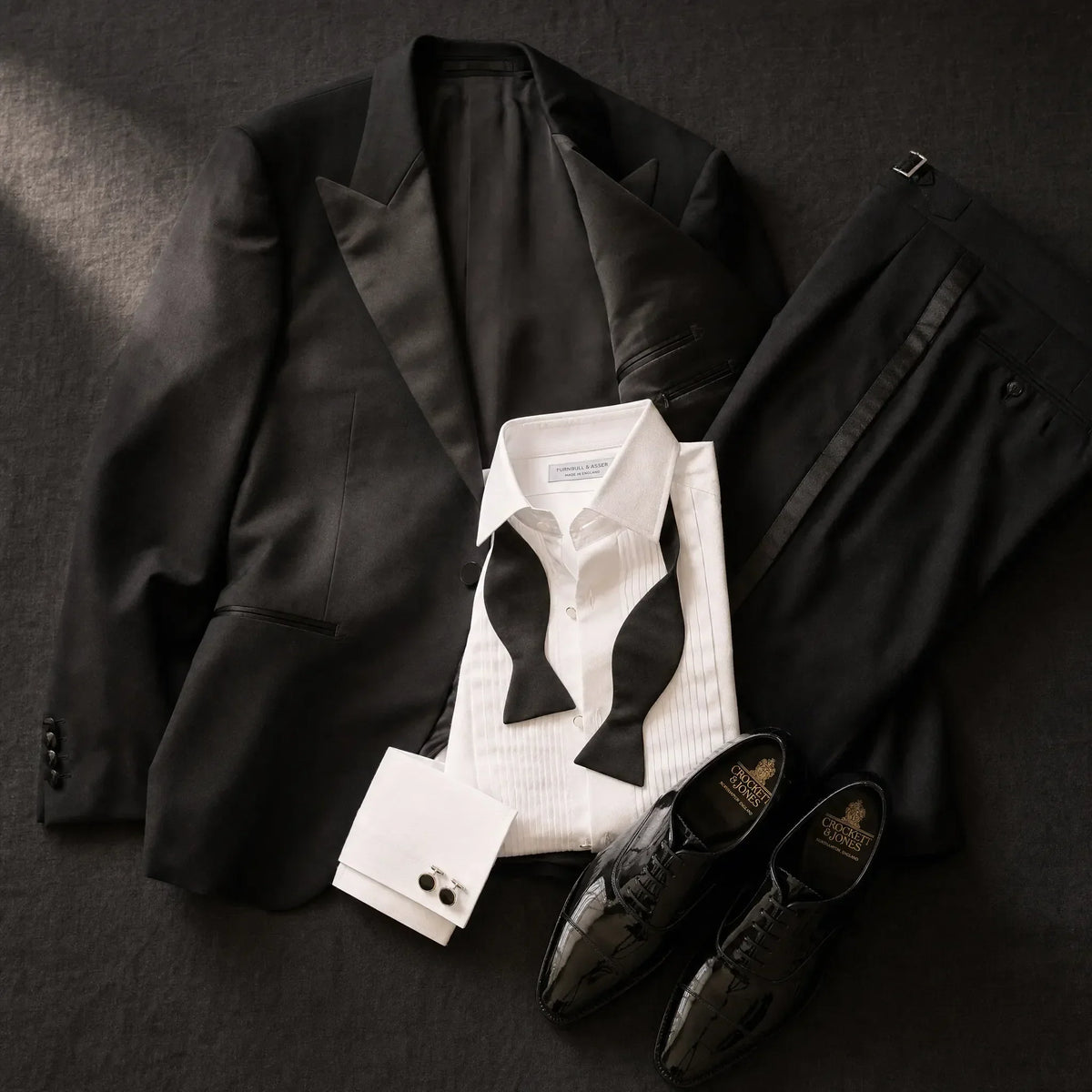
If the whole wedding takes place in the evening and your guests are in black tie, a dinner suit is usually the right call. If you're not sure whether a smart suit will pass, our guide on tuxedo vs suit for black tie events explains exactly which to wear.
Whatever you choose, tell your guests clearly on the invitation. A simple line such as "Dress code: lounge suits" removes the guesswork.
Two-piece or three-piece?
A two-piece suit, made up of a jacket and trousers, is lighter and cooler. It works well for summer weddings, hot climates and relaxed venues.
A three-piece suit adds a matching waistcoat, and for most grooms it's the stronger option. It looks more formal and more like a wedding outfit. It keeps you looking sharp when the jacket comes off at the reception, and it quietly separates you from guests, who will mostly be in two-piece suits.
For the best of both, wear a two-piece suit with a contrasting waistcoat. You get the formality of a waistcoat with a personal touch.
Single-breasted or double-breasted?
Single-breasted jackets are the classic choice. A one-button jacket feels sleek and modern, while a two-button jacket is timeless and flatters most body shapes. Always leave the bottom button undone.
Double-breasted jackets have overlapping front panels and two columns of buttons. They look bold and confident, and suit taller grooms or anyone who wants something a little different. Keep a double-breasted jacket buttoned while standing.
Choosing your lapels
The lapel style changes the whole mood of the suit. Notch lapels are classic, versatile and easy to wear. Peak lapels point upward and look more formal and striking, which makes them one of the easiest ways to lift a lounge suit into wedding territory. Shawl lapels belong to dinner jackets, so save them for black tie.

Best lounge suit colours for a groom
Colour is what turns a lounge suit from office wear into a wedding suit. Here are the most popular groom suit colours and when each works best.
| Colour | Best for | Why it works |
|---|---|---|
| Navy | Any season, any venue | Flatters almost every skin tone and looks rich in photos |
| Charcoal grey | Winter and evening weddings | Serious, elegant and slightly more formal |
| Mid and light grey | Spring and summer daytime weddings | Fresh, light and relaxed |
| Forest, bottle or sage green | Garden and countryside weddings | Modern, popular and beautiful against greenery |
| Burgundy and brown tones | Autumn and winter weddings | Warm and rich, especially in flannel or tweed |
| Stone, sand and cream | Summer, beach and hot-climate weddings | Light, cool and relaxed |
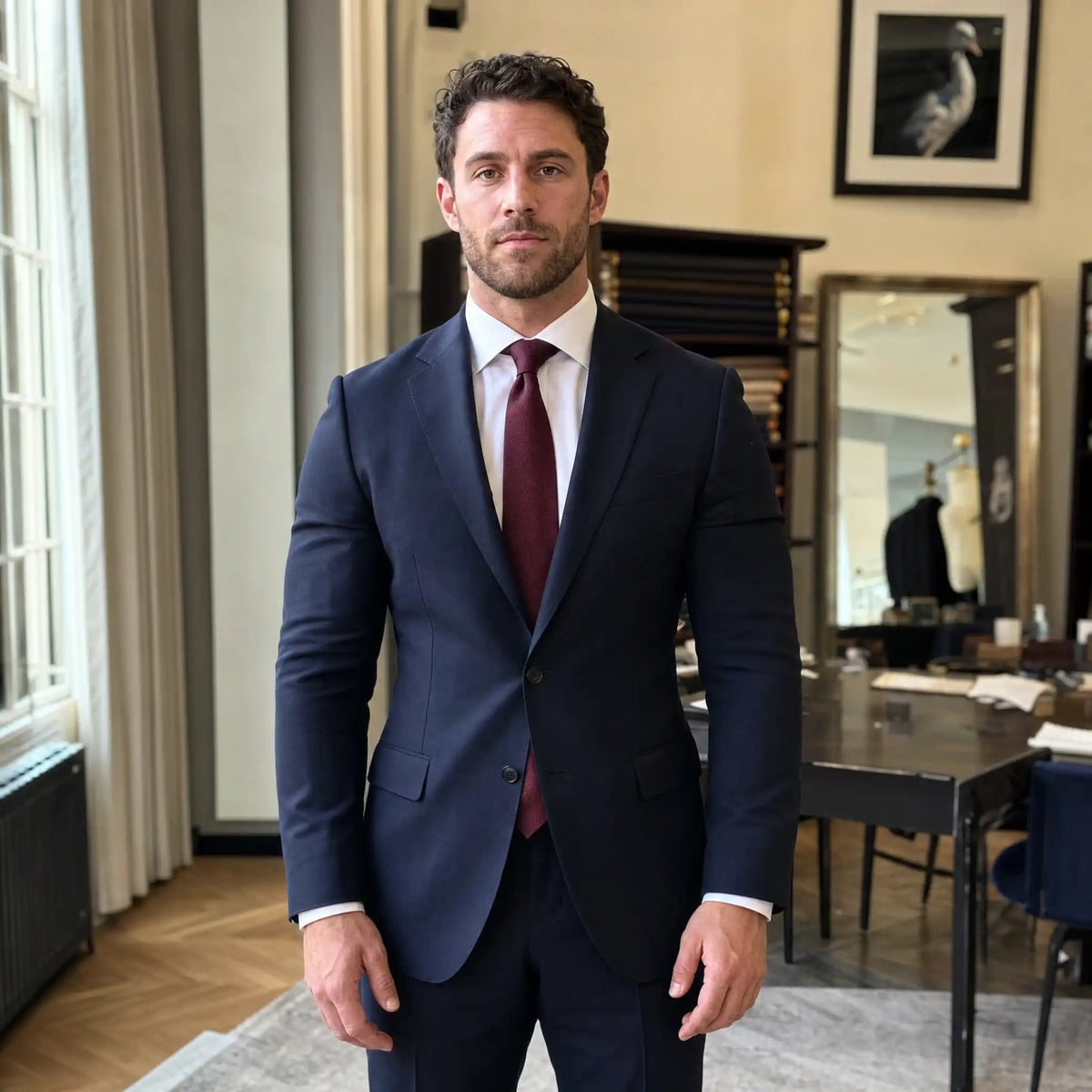
If you choose navy, go for a brighter or deeper shade than your work suit so it feels special. With cream and stone, check that your suit doesn't clash with or compete against the bride's dress. A black lounge suit can look sombre in daylight, so if you love black, save it for an evening wedding with a proper dinner suit.
Before deciding, look at your wedding colour scheme, flowers and venue, and hold fabric samples up in natural daylight rather than shop lighting. Very bright or very dark shades can lose detail on camera, so think about how the colour will look in your photographs.

Choosing fabric by season and climate
The right fabric keeps you comfortable and looking sharp from the vows to the last dance. Cloth weight is quoted in ounces (oz) or grams per metre (g). Lighter cloth feels cooler, while heavier cloth drapes better and feels warmer.
| Season or climate | Best fabrics | Approx. weight | Why it works |
|---|---|---|---|
| Summer and hot climates | Lightweight worsted wool, open-weave high-twist wool, wool and mohair, linen blends | 7–9 oz (about 220–280g) | Breathes well and resists creasing better than pure linen |
| Spring and autumn | Worsted wool, wool and silk blends | 9–11 oz (about 280–340g) | Comfortable all day with a clean, smart drape |
| Winter | Flannel, tweed, heavier wool, velvet for jackets | 11–14 oz and above (about 340g+) | Warm, textured and rich in photos |
If you're marrying in a hot climate such as Riyadh or elsewhere in the Gulf, be careful with pure linen. It feels cool but creases heavily and can look untidy in photos by the evening. A lightweight open-weave wool, or a wool, silk and linen blend, gives you breathability with a much cleaner finish. A lighter colour, a half-lined jacket and a softer shoulder will also help you stay cool.
Whatever the season, choose natural fibres. Wool breathes and moves with your body, while cheap polyester blends trap heat and look shiny under a camera flash.
Plain or patterned?
Some style guides say patterns make a wedding suit look less formal. Others say pattern is exactly what makes it feel special. Both are partly right.
The simple rule is to keep the main suit plain or subtly textured and add pattern in just one place. A plain navy suit with a checked waistcoat looks personal and polished. A subtle birdseye, herringbone or faint check looks rich up close and still reads as plain in photographs.
Avoid strong pinstripes, because they look corporate, which is the opposite of what you want. And avoid putting bold pattern on the suit, shirt and tie all at once.
Getting the fit right
Fit matters more than the brand, the price or even the fabric. A well-fitted suit makes you look taller, slimmer and more confident, and it's what makes you look like the groom rather than a guest. Use this table as a checklist at every fitting.
| Area | What a good fit looks like |
|---|---|
| Shoulders | The seam ends where your shoulder ends, with no dents or overhang |
| Collar | The jacket collar sits flat against your shirt collar, with no gap at the back |
| Chest and waist | The buttoned jacket sits smoothly, with no X-shaped pulling around the button |
| Jacket length | Covers your seat and ends roughly level with your knuckles |
| Sleeves | Show around 1–1.5cm of shirt cuff |
| Waistcoat | Covers the trouser waistband fully, with no shirt showing in between |
| Trousers | Sit comfortably on the waist, with a slight break or no break at the shoe |
Finally, test the suit the way you'll use it on the day. Raise your arms, sit down, hug someone and try a few dance moves. If anything pulls or restricts you, ask your tailor to adjust it.

Bespoke vs made-to-measure vs off-the-peg
How your suit is made has the biggest effect on how well it fits. Here's how the three main options compare.
| Off-the-peg | Made-to-measure | Bespoke | |
|---|---|---|---|
| How it's made | Mass-produced in standard sizes | A standard pattern adjusted to your measurements | A new pattern cut from scratch for your body |
| Fit | Average; usually needs alterations | Good | Excellent |
| Fabric choice | Limited | Wide | Widest, from the finest mills |
| Fittings | None, or one alteration | One or two | Several |
| Typical lead time | Same day | 4–6 weeks | 6–8 weeks |
| Best for | Tight budgets and last-minute plans | Good value with a personal fit | Grooms who want the best fit and a suit that lasts |
Off-the-peg can work if you have a very standard build and budget for alterations. Made-to-measure is a solid step up. Bespoke is the gold standard, because your tailor accounts for your posture, your shoulders and the way you naturally stand. On a day that will be photographed from every angle, that difference is easy to see.
How to style your lounge suit
The shirt
A crisp white shirt is timeless and makes every suit colour look sharper. Pale blue and soft pink also work beautifully for daytime weddings. Choose a cutaway or spread collar if you plan to wear a tie, and double cuffs if you want to wear cufflinks. The collar should fit closely, so you can just slide two fingers inside when it's buttoned.
Tie, bow tie or no tie?
A silk tie is the classic choice. Try a textured, grenadine or subtly patterned silk for more depth than a plain office tie, and pick a shade that links to your wedding colour scheme, such as the bridesmaids' dresses or the flowers.
A bow tie feels more playful and works well for evening receptions, while a cravat adds old-fashioned charm to a three-piece suit. Going without a tie can work at a beach or very relaxed wedding, but only with a sharp collar and a very well-fitted suit.
The waistcoat
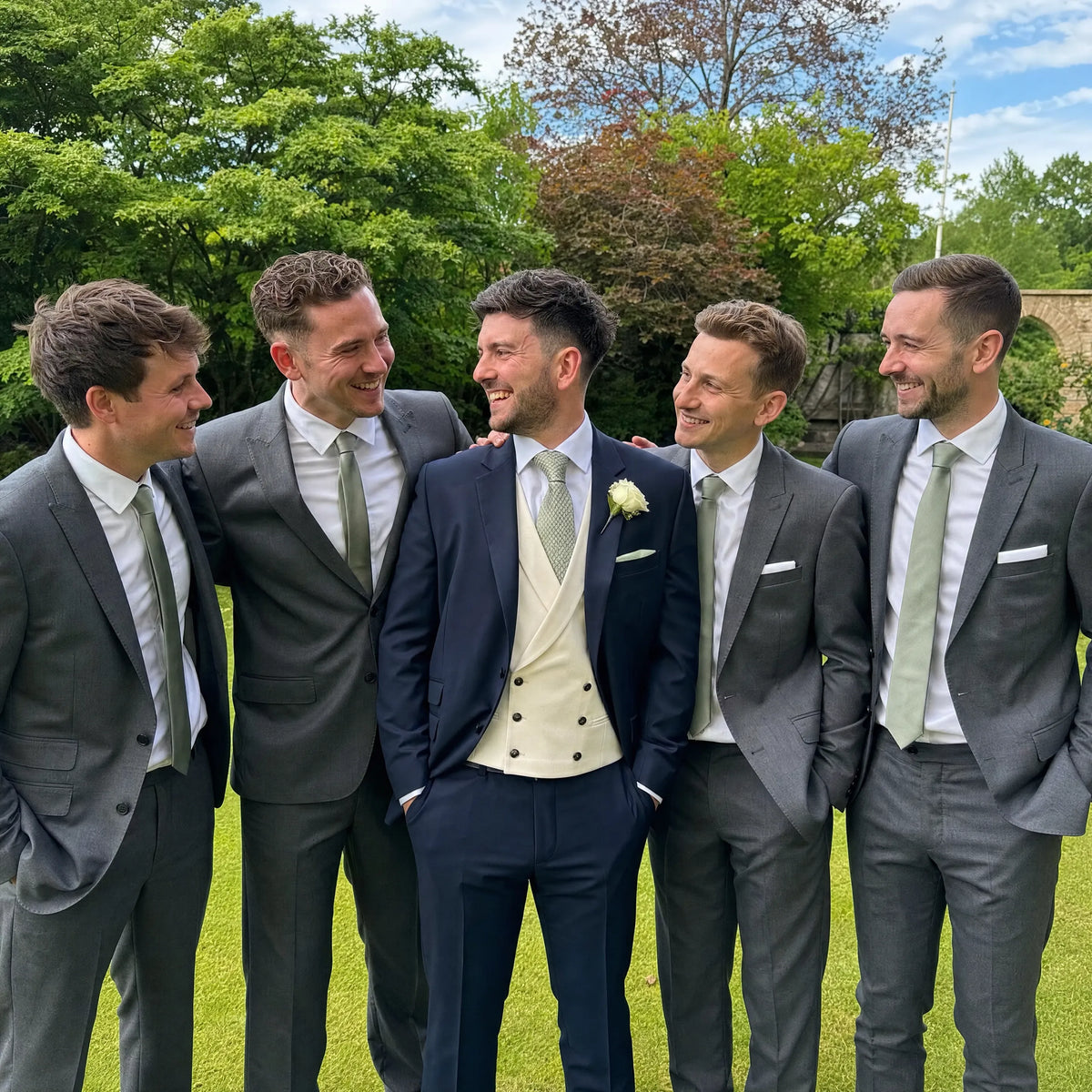
The waistcoat is your chance to shine. Match it to the suit for a classic three-piece look, or choose a contrasting colour or texture, such as a cream, dove grey or checked waistcoat under a navy jacket. As with the jacket, leave the bottom button undone.
Accessories
Small details are what make a lounge suit feel like a wedding suit. A white linen pocket square is classic, while a silk square in a complementary colour adds personality. It should work with your tie rather than match it exactly.
A fresh buttonhole flower is one of the simplest signs that you're the groom, so coordinate it with the bride's bouquet. Meaningful cufflinks, perhaps engraved or passed down in the family, add a personal story. A tie bar worn between the third and fourth shirt buttons keeps everything neat.
For your watch, a slim dress watch on a leather strap looks far better than a chunky sports watch. If you wear a waistcoat, choose braces or side adjusters instead of a belt for a cleaner line. Socks can match your trousers or add a subtle pop of colour when you sit down.

The shoes
| Shoe style | Best for |
|---|---|
| Oxford shoes | The smartest option; suits every lounge suit |
| Derby shoes and brogues | Countryside and barn weddings |
| Suede loafers | Summer, beach and destination weddings |
| Chelsea boots | Autumn and winter weddings with slimmer suits |
As a simple rule, dark brown works with navy, green, grey and stone suits, while black pairs best with charcoal and darker greys. Wear your shoes around the house for a week or two before the wedding so they feel comfortable on the day.
How to stand out from your groomsmen and guests
When most guests wear lounge suits too, you need a few clear signs that you're the groom. The golden rule is to coordinate, not clone. Keep your groomsmen, and ideally the father of the bride, in the same colour family, then make your own outfit one step more special.
You might wear a three-piece while your groomsmen wear two-piece suits, or choose a different waistcoat colour or a peak-lapel jacket. A slightly different shade, a unique buttonhole or a standout pocket square also works. One or two of these touches is plenty.

Styling your lounge suit by venue and theme
| Wedding type | Suit suggestion | Styling tips |
|---|---|---|
| City or registry office | Navy or charcoal worsted wool with peak lapels | Silk tie and Oxford shoes for a sleek, modern look |
| Countryside or barn | Green, brown or check in tweed or flannel | Knitted tie with brogues or Derby shoes |
| Garden or summer | Light grey, mid blue or sage in lightweight wool | Pastel tie, suede loafers and a linen pocket square |
| Beach or destination | Stone, sand or pale blue in a linen blend or open-weave wool | Open collar or light tie with loafers |
| Hot climate, such as Riyadh | Light colours in lightweight open-weave wool | Half-lined jacket, breathable cotton shirt and an evening ceremony if possible |
| Winter | Charcoal, burgundy or deep green flannel | Velvet jacket for the evening and Chelsea boots |
From ceremony to evening reception
One of the best things about a lounge suit is how easily it adapts as the day goes on. Keep the full suit on and your jacket buttoned for the ceremony, as this is when the most important photos are taken. Unbutton the jacket when you sit down for the wedding breakfast, and keep it on during the speeches for a polished look.
When the evening party starts, take the jacket off and let your waistcoat keep you looking smart. You could also swap your tie for a bow tie or change into a velvet jacket for a fresh evening look. Keep a spare shirt at the venue on hot days, and ask your best man to look after your jacket so it stays neat.
A simple groom's lounge suit timeline
| When | What to do |
|---|---|
| 6 to 9 months before | Decide on your dress code and style, then book a tailor consultation |
| 4 to 5 months before | Choose your fabric and colour, and start the bespoke or made-to-measure process |
| 2 to 3 months before | Attend fittings and choose your shirt, tie, shoes and accessories |
| 1 month before | Have your final fitting and organise your groomsmen's outfits |
| 1 to 2 weeks before | Collect your suit, break in your shoes and try the full outfit on together |
| The day before | Steam or press the suit and lay everything out, including cufflinks and buttonhole |
Common mistakes to avoid
The most common mistake is simply wearing your work suit. It will look like work, so make sure your wedding suit feels clearly special. Leaving things too late is another, because good tailoring takes time and rushed suits rarely fit well.
Remember that a well-fitted affordable suit beats an expensive one that fits poorly. Choose a fabric that suits the weather, since a heavy suit in July or in Gulf heat will make you miserable. Keep pattern to one or two pieces, never wear brand-new shoes on the day, and always check that your suit works with the bride's dress, the flowers and the venue.
Wearing your lounge suit after the wedding
This is where a lounge suit really pays off. Unlike a morning suit, you can wear it again and again. Wear the full suit to other weddings, christenings, parties and formal dinners. Wear the jacket with chinos or jeans for a smart casual look, or the trousers with a fine knit jumper.
You can even wear it on your anniversary as a reminder of the day. Choosing a timeless cut and quality cloth means your wedding suit stays in your wardrobe for years, not just for one day.
Your lounge suit, made only for you
Every tip in this guide comes back to one thing: fit. The right colour and the finest accessories can't rescue a suit that doesn't sit properly on your body. That's why so many grooms choose bespoke tailoring for their wedding day.
Michael Frackowiak is a bespoke wedding tailor who trained alongside Savile Row cutters, with private studios in Liverpool and Riyadh. Rather than adjusting a standard pattern, every suit begins with a fresh pattern cut for your body, your posture and the way you naturally stand. Lapels are shaped by hand so they hold their curve, and armholes are finished by hand so you can move, hug and dance freely all day.
Grooms choose from outstanding cloths by respected mills including Holland & Sherry, Scabal, Loro Piana, Vitale Barberis Canonico and Piacenza, with expert guidance on the right colour and weight for the season and venue. Whether you're marrying in the UK or in the heat of Riyadh, Michael will help you create a lounge suit that feels as good as it looks, and that you'll be proud to wear for years.
If you want to look and feel your best on the most photographed day of your life, explore Michael's bespoke wedding suits and book a private consultation.
Frequently asked questions
Can a groom wear a lounge suit to his wedding?
Yes. A lounge suit is perfectly acceptable for a groom and is now one of the most popular choices, especially for civil ceremonies, city venues, barn weddings and destination weddings.
What is the difference between a lounge suit and a morning suit?
A lounge suit has a standard-length jacket and is semi-formal. A morning suit has a tailcoat that curves away at the front, is more formal, and is traditionally worn only in the daytime.
What colour lounge suit should a groom wear?
Navy is the most popular and flattering choice. Charcoal suits winter and evening weddings, light grey and stone suit summer, and green is a stylish modern option. Avoid black for daytime weddings.
Should the groom wear a two-piece or three-piece suit?
A three-piece usually works best. It looks more formal, helps you stand out from guests, and keeps you looking sharp when you take your jacket off at the reception.
How far in advance should I order my wedding suit?
For a bespoke suit, start six to nine months before the wedding. The suit itself takes six to eight weeks to make, but starting early gives you time to choose your fabric and attend fittings without any stress.
What shoes should I wear with a lounge suit at my wedding?
Oxford shoes are the smartest option. Brogues and Derby shoes suit countryside weddings, while suede loafers work well in summer and warm climates. Dark brown suits most colours, and black pairs best with charcoal.
What is the best lounge suit fabric for a hot-climate wedding?
Lightweight open-weave wool, wool and mohair, or a wool, silk and linen blend. They breathe well and resist creasing better than pure linen, so you look fresh in photos all day.
Should the groom's suit match the groomsmen's suits?
Not exactly. Keep everyone in the same colour family, but give the groom one standout detail, such as a waistcoat, a different shade, a peak lapel or a unique buttonhole.
Can I wear my wedding lounge suit again?
Absolutely. A well-made lounge suit can be worn to other weddings, events and dinners, and the jacket and trousers can be styled separately for smart casual looks.
Can I wear a lounge suit to a black tie wedding?
It's best not to. Black tie calls for a dinner suit or tuxedo, and a standard lounge suit will look underdressed next to other guests.